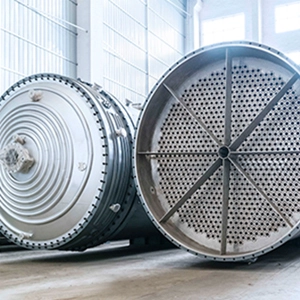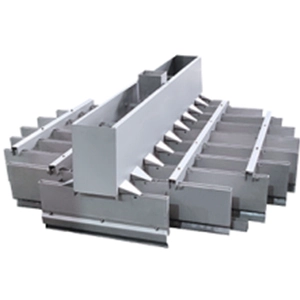
Distillation efficiency is heavily influenced by internal vapor-liquid mass transfer conditions inside the column. In modern separation systems, structured packing is widely used to reduce pressure drop, increase effective contact area, and improve energy performance in both grassroots installations and revamp projects.
However, selecting packed internals is rarely straightforward. A configuration that performs well in simulation may become hydraulically unstable under uneven vapor loading, poor irrigation quality, or fluctuating feed conditions. In practice, many column performance problems originate from internal distribution behavior rather than from the corrugated packing itself.
This is particularly common in vacuum distillation systems, high-purity solvent recovery, and thermally sensitive separations where even moderate pressure increases can affect bottom temperature, product stability, and reboiler duty.
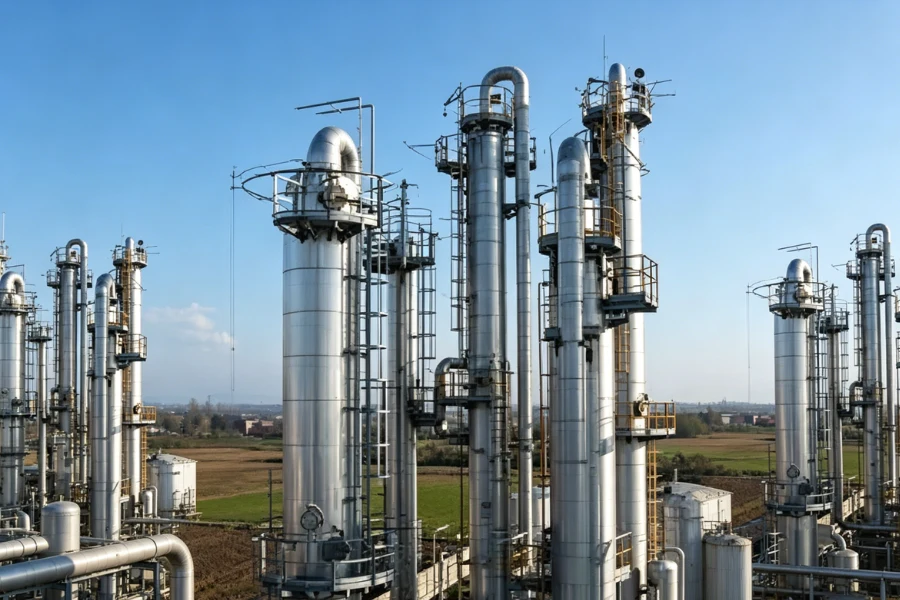
Why Structured Packing Improves Distillation Efficiency
Compared with conventional trays, structured packing creates a larger wetted surface area while maintaining relatively open vapor flow channels. Most designs use corrugated metal sheets, wire gauze, ceramic blocks, or polymer materials arranged in alternating orientations to improve vapor-liquid contact throughout the packed section.
The primary operational advantages include:
- Lower pressure drop
- Higher mass transfer efficiency
- Higher vapor handling capacity
- انخفاض استهلاك الطاقة
- Better performance under vacuum conditions
In low-pressure systems, the pressure drop across high-efficiency packing may be substantially lower than an equivalent tray stack. This directly reduces vapor compression requirements and helps maintain lower boiling temperatures inside the tower.
That difference becomes operationally important in systems handling:
- Heat-sensitive APIs
- Specialty solvents
- Fragrance intermediates
- Fine chemical products
- High-purity organic compounds
Excessive hydraulic resistance in these systems may increase bottom temperature enough to accelerate degradation, discoloration, or side reactions.
Process Conditions That Determine Packing Selection
Internal selection should always begin with process conditions rather than packing catalogs.
In industrial projects, the optimal configuration depends on how the column is expected to behave under actual operating loads, not only under design conditions. Vapor traffic, liquid irrigation rate, fouling tendency, and operating pressure all influence long-term separation stability.
Several factors usually dominate selection decisions:
| Process Variable | Operational Impact |
|---|---|
| Operating pressure | Determines pressure drop sensitivity |
| Separation target | Influences required efficiency and HETP |
| Vapor load | Affects flooding margin |
| Liquid load | Influences wetting quality |
| Fouling tendency | Limits allowable channel spacing |
| Corrosion conditions | Determines material selection |
| Turndown requirements | Influences operational flexibility |
In many revamp projects, engineers initially focus on increasing theoretical stages. However, the limiting factor often becomes hydraulic stability rather than separation efficiency.
For example, increasing packing surface area may improve mass transfer performance while simultaneously narrowing the safe operating window at high vapor loads. Columns that appear efficient during stable operation can become vulnerable to flooding or maldistribution during feed fluctuations.
This is one reason experienced process engineers rarely optimize solely for maximum efficiency.
Balancing Pressure Drop and Separation Efficiency
One of the most important engineering decisions in packed tower design is balancing separation efficiency against hydraulic resistance.
Higher surface area packing generally improves vapor-liquid mass transfer because it increases wetted contact area inside the column. At the same time, tighter flow channels increase resistance to vapor movement.
In practice, improving efficiency usually increases hydraulic resistance and reduces operating margin at higher vapor loads.
Typical trends include:
| Packing Type | Relative Efficiency | Relative Capacity | Typical Service |
|---|---|---|---|
| Low surface area packing | معتدل | عالية | High-throughput absorption |
| Medium surface area packing | Balanced | Balanced | General distillation |
| High surface area packing | عالية جداً | Lower | Vacuum and high-purity separation |
This tradeoff becomes particularly important in vacuum distillation.
Under vacuum conditions, even small increases in pressure drop can raise boiling temperature throughout the packed bed. In thermally sensitive systems, this may increase product degradation rates or reduce product color stability.
For this reason, some vacuum towers intentionally sacrifice theoretical stage density to maintain lower hydraulic resistance and better temperature control.
دودجن has observed that many retrofit projects underestimate this relationship. Simulation models may predict improved purity after increasing packing area, while actual field operation later reveals reduced flooding margin or unstable vapor distribution.
How Packing Geometry Affects Column Performance
Packing configuration directly influences vapor distribution, liquid spreading behavior, pressure drop, and flooding characteristics inside the tower.
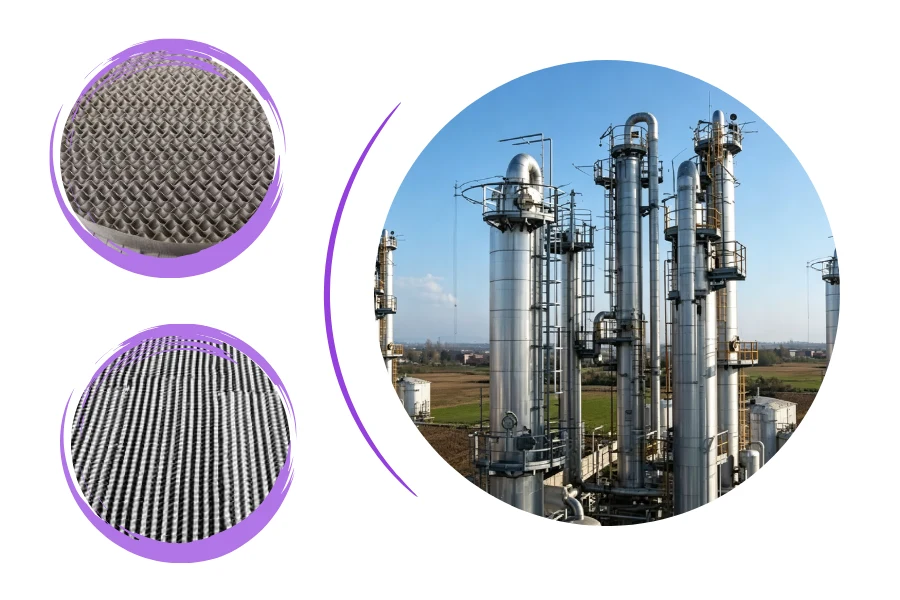
Two corrugation geometries are commonly used in industrial packed columns:
| Packing Geometry | الخصائص | Typical Application |
|---|---|---|
| Y-type – 45° corrugation | Higher efficiency and stronger mass transfer | High-purity distillation |
| X-type – 60° corrugation | Lower pressure drop and higher vapor capacity | High-throughput service |
Y-type corrugated packing promotes stronger vapor-liquid interaction and generally achieves lower HETP values. However, increased interaction intensity also increases vapor resistance.
X-type designs sacrifice some separation efficiency while improving vapor handling capability and reducing pressure drop.
Commercial packing surface areas typically range from approximately 50 m²/m³ to 750 m²/m³.
General industrial selection trends include:
- 125–250 m²/m³ – higher capacity, lower efficiency
- 250–500 m²/m³ – balanced distillation performance
- Above 500 m²/m³ – ultra-high purity or deep vacuum service
Very high surface area designs should be evaluated carefully in systems susceptible to fouling, salt deposition, or unstable liquid distribution.
In actual operation, higher-efficiency internals do not always improve overall column performance. Once liquid distribution deteriorates, effective mass transfer area declines rapidly regardless of theoretical packing efficiency.
Choosing Packing Materials for Different Process Conditions
Material selection depends on more than corrosion resistance alone. Mechanical strength, wettability, fouling tendency, thermal stability, and maintenance requirements all influence long-term performance.
Metal Structured Packing
Metal packing is commonly manufactured from stainless steel or specialty alloys.
Typical advantages include:
- High mechanical strength
- Stable wettability
- Good thermal resistance
- Reliable long-term hydraulic behavior
Applications commonly include:
- Petroleum refining
- Petrochemical separation
- Air separation systems
- Solvent recovery units
Metal corrugated packing is often preferred in distillation systems requiring stable operation under elevated temperature and pressure conditions.
Wire Mesh Packing
Wire gauze packing provides extremely high surface area and exceptionally low pressure drop.
تشمل التطبيقات النموذجية ما يلي:
- High-vacuum distillation
- Pharmaceutical purification
- Fine chemical separation
- Fragrance processing
However, these packed sections are highly sensitive to fouling and particulate contamination. Even minor solids accumulation may disrupt vapor flow paths and reduce effective separation performance.
For this reason, wire mesh internals are generally limited to relatively clean process systems.
Ceramic Packing
Ceramic packed internals are commonly used in highly corrosive environments.
تشمل التطبيقات النموذجية ما يلي:
- Sulfuric acid production
- Acid gas treatment
- Corrosive chemical absorption
- High-temperature service
Ceramic materials provide excellent chemical stability and thermal resistance. However, they are mechanically brittle and require careful handling during installation and maintenance.
Plastic Packing
Plastic packing is commonly manufactured from PP, PVDF, or related polymers.
Advantages include:
- Lower cost
- Corrosion resistance
- Reduced scaling tendency
- Lower weight
Applications commonly include:
- Water treatment
- Waste gas scrubbing
- Low-temperature absorption systems
Temperature limitations remain an important constraint. Under elevated thermal conditions, polymer deformation may reduce long-term mechanical stability inside the packed bed.
Why Liquid Distribution Is Critical in Packed Columns
Many packed tower performance problems originate from poor liquid distribution rather than from the packing itself.
Even high-efficiency internals can lose separation capability rapidly if irrigation quality becomes uneven across the tower cross-section.
Common operational consequences include:
- Dry zones
- Channeling
- Wall flow
- Reduced wetted area
- Premature flooding
- Localized vapor bypassing
In severe cases, actual separation performance may decline far below design expectations despite proper packing selection.
This is why distributor design is often more important than increasing packing surface area.
High-performance packed sections typically require:
- Liquid distributors
- Packing support plates
- Liquid redistributors
- Vapor inlet calming systems
In high-efficiency distillation service, liquid distribution variation is often controlled within approximately 1–2%.
Tall columns frequently require redistributors between packed beds because liquid tends to migrate toward preferred flow paths as bed height increases.
دودجن has encountered revamp cases where replacing internals alone did not improve separation performance because the original distributor geometry remained unchanged.
Common Operating Problems in Structured Packing Systems
Although structured packing offers major efficiency advantages, it is not universally suitable for all distillation services.
Several operational risks become increasingly important under industrial conditions:
- Fouling accumulation
- Salt deposition
- Polymer formation
- Solids contamination
- Distributor plugging
- Uneven vapor loading
As deposits accumulate inside the packed bed, vapor resistance increases while liquid spreading quality deteriorates. Over time, this can reduce both separation efficiency and column capacity.
High-efficiency wire gauze systems are particularly sensitive because narrow flow channels are more easily obstructed.
In some refinery and chemical applications, trays continue to outperform packed sections simply because they tolerate unstable process conditions more effectively over long operating cycles.
This is especially relevant in systems with:
- Heavy particulate loading
- Unstable feed composition
- Frequent shutdown cycles
- High fouling tendency
- Severe thermal cycling
The most efficient internals on paper are not always the most reliable in long-term operation.
When Tray Columns May Perform Better Than Packing
Tray columns remain widely used across refining, petrochemical, and bulk chemical operations for practical operational reasons.
Compared with packed towers, trays generally provide:
- Better solids tolerance
- More predictable hydraulic behavior
- Easier inspection access
- Better resistance to maldistribution
- More stable performance under fluctuating liquid loads
In high-pressure distillation systems, trays may also provide more predictable vapor-liquid interaction because fluid density relationships become less favorable for packed sections.
In some cases, replacing trays with corrugated packing reduces pressure drop but introduces new hydraulic sensitivities that were previously absent.
This is one reason many experienced process engineers evaluate retrofit economics conservatively rather than assuming that higher-efficiency internals automatically improve overall plant performance.
Using Structured Packing in Column Revamp Projects
Packed internals are widely used in revamp projects because they can often increase throughput or reduce pressure drop without replacing the existing shell.
Typical revamp objectives include:
- Increasing capacity
- Improving separation purity
- Lowering energy consumption
- Reducing operating pressure
- Recovering lost performance from aging internals
However, revamp limitations frequently originate outside the packed bed itself.
Common bottlenecks include:
- Existing distributor geometry
- Support plate limitations
- Vapor inlet maldistribution
- Shell diameter restrictions
- Condenser limitations
- Reboiler constraints
Many revamp projects initially appear successful during simulation but later encounter instability under real operating conditions because vapor distribution or hydraulic margin was underestimated.
For this reason, successful revamps require integrated evaluation of process hydraulics, mechanical internals, and long-term operating behavior rather than simple packing replacement.
Process Support for Structured Packing Selection
دودجن focuses on process engineering solutions for API production, solvent recovery, crystallization systems, and high-purity chemical separation.
Rather than functioning as a general equipment reseller, دودجن supports clients through:
- Internal selection analysis
- Distillation process optimization
- Hydraulic evaluation
- Distributor and redistributor assessment
- Revamp feasibility studies
- Process simulation support
- Turnkey engineering coordination
In many separation systems, long-term column performance depends less on catalog specifications and more on how well the packed tower integrates with actual operating conditions.
Effective internal selection requires balancing separation efficiency, hydraulic stability, fouling resistance, energy consumption, and operational reliability across the entire process system.
دودجن supports this evaluation from the perspective of process behavior, not simply component replacement.