에너지 소비량이 최대 40%에 달합니다! 증류 비용을 줄이는 방법은? 도겐의 다양한 분리 기술로 장비 업그레이드를 지원합니다.

I. 정책 배경 핵심 정책 목표: 2029년까지 식별된 노후 장비의 교체 및 개조 작업을 종합적으로 완료하고, 산업을 더 안전하고 친환경적이며 스마트한 전환으로 유도하며, 기업이 선진 산업 표준을 벤치마킹하도록 장려하고, 적용을 촉진합니다.


I. 정책 배경 핵심 정책 목표: 2029년까지 식별된 노후 장비의 교체 및 개조 작업을 종합적으로 완료하고, 산업을 더 안전하고 친환경적이며 스마트한 전환으로 유도하며, 기업이 선진 산업 표준을 벤치마킹하도록 장려하고, 적용을 촉진합니다.
Reactive distillation combines chemical reaction and multistage separation in the same column, but integration alone does not guarantee a better process. Industrial performance depends on whether reaction kinetics, vapor-liquid equilibrium (VLE), catalytic contact, mass transfer, hydraulics, and thermal behavior can…
Direct air capture (DAC) creates a demanding gas-liquid mass-transfer problem. Atmospheric CO₂ is extremely dilute, so liquid-solvent DAC must process large volumes of air while creating enough effective interfacial area for CO₂ absorption. This changes conventional absorber design logic. The…
Polymer-grade monomer purification is not simply about increasing an assay from 99% to 99.9% or higher. Two monomer streams with the same headline purity can behave very differently in polymerization if the remaining impurities differ in chemical identity or reactivity.…
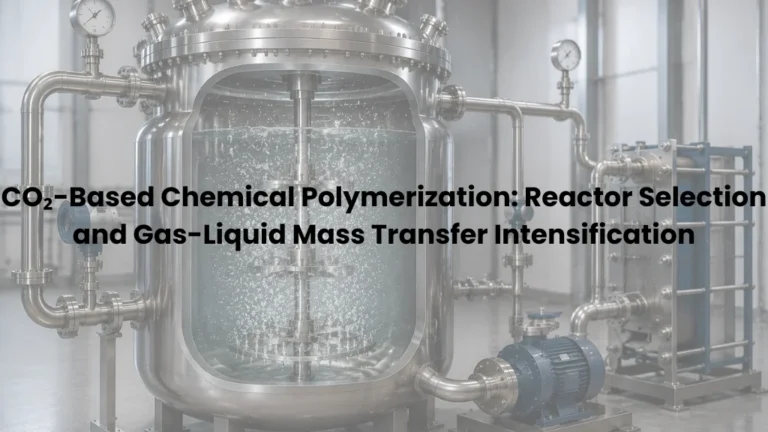
CO₂-based polymerization is often developed around catalyst activity, selectivity, conversion, and polymer structure. At industrial scale, however, chemistry alone does not determine whether the process can operate efficiently. CO₂ must continuously dissolve and transfer into a reacting liquid whose viscosity,…
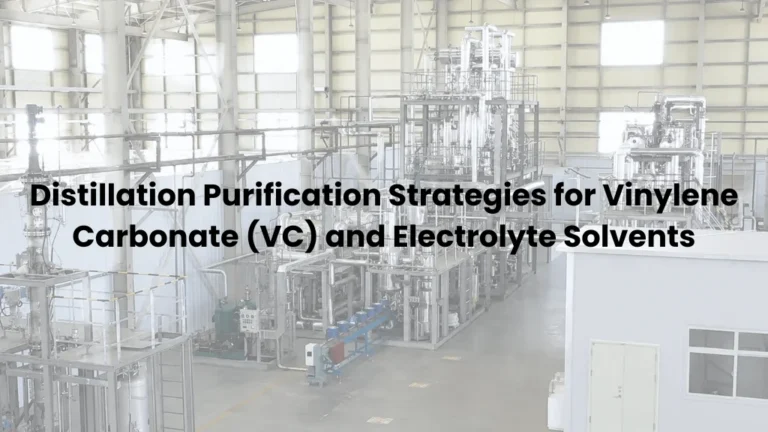
Purifying vinylene carbonate (VC) for battery electrolyte applications is not simply a matter of adding theoretical stages or increasing reflux. VC is thermally sensitive and prone to polymerization, so aggressive separation conditions can improve fractionation while simultaneously reducing yield or…
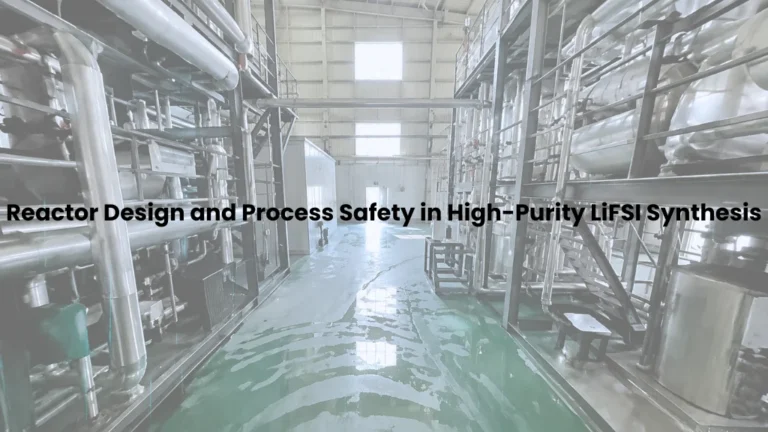
Producing high-purity lithium bis(fluorosulfonyl)imide (LiFSI) is not simply a matter of maximizing reaction conversion. Reactor conditions influence hydrolysis, side reactions, impurity formation, thermal exposure, corrosion risk, and the purification burden that follows synthesis. This makes reactor design part of the…
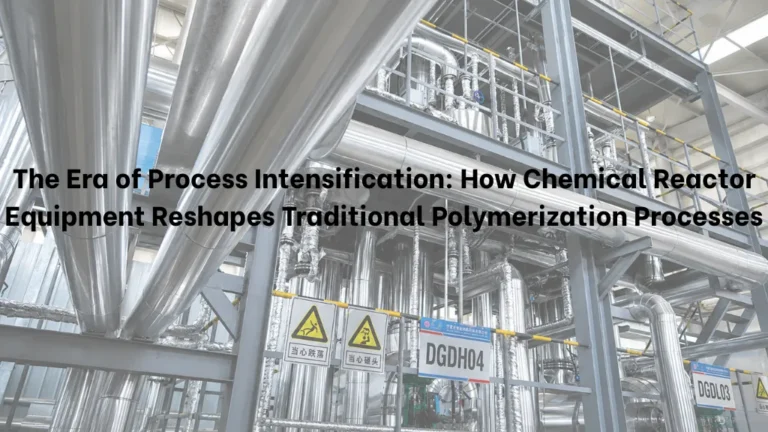
Introduction For decades, advances in industrial polymerization were primarily driven by catalyst innovation, larger production units, and incremental process optimization. These approaches enabled the commercial production of polyethylene (PE), polypropylene (PP), polystyrene (PS), PVC, PET, and many other high-volume polymers…
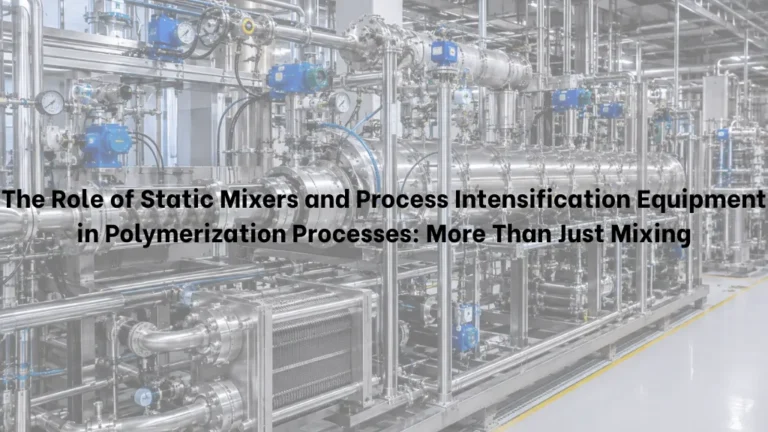
Introduction Polymerization is often described as a chemical reaction, yet successful industrial production depends on much more than reaction kinetics. As conversion increases and polymer chains grow, transport phenomena—including heat transfer, mass transfer, residence time distribution (RTD), and flow behavior—gradually…
From Laboratory Success to Commercial Reality A polymerization process that delivers excellent results in a 5 L laboratory reactor may behave very differently after being transferred to a 100 m³ commercial production unit. During scale-up, mixing becomes non-ideal, heat removal…